Trademarking your brand name in India: a founder’s guide to classes, fees and timelines
You can design a beautiful brand on a name someone else already owns. A trademark search and filing early on costs little compared to a rebrand later.
Quick summary
- Search before you design: check the IP India database in every class you’ll trade in.
- Government e-filing fees are ₹4,500 per class for individuals, startups and small enterprises, ₹9,000 for others.
- After filing come examination, publication and a four-month opposition window; plan for a year or more.
- Use ™ once you’ve applied; use ® only after the mark is registered.
Summary by Anisha. Prefer an AI take? Ask Google AI to summarise it (opens in a new tab).
This is general information from a branding studio, not legal advice. Fees and procedures change, so confirm with the IP India website and a registered trademark agent or attorney before you file.
Every year we meet a founder who has to rename a brand after launch. The packaging is printed, the Instagram handle has followers, and a letter arrives from someone who registered the name first. It’s almost always avoidable with an afternoon of searching and a filing that costs less than a single ad shoot.
When to search
Before you pay for a logo. Names come first, and a name you can’t protect is a name you shouldn’t fall in love with. Search the public trademark database on IP India for exact matches and close variants: different spellings, the name with and without spaces, and names that sound the same when said aloud. Then ask a trademark professional for an opinion on anything close. Similar-sounding marks in the same category can be refused or opposed even if the spelling differs.
Choosing your classes
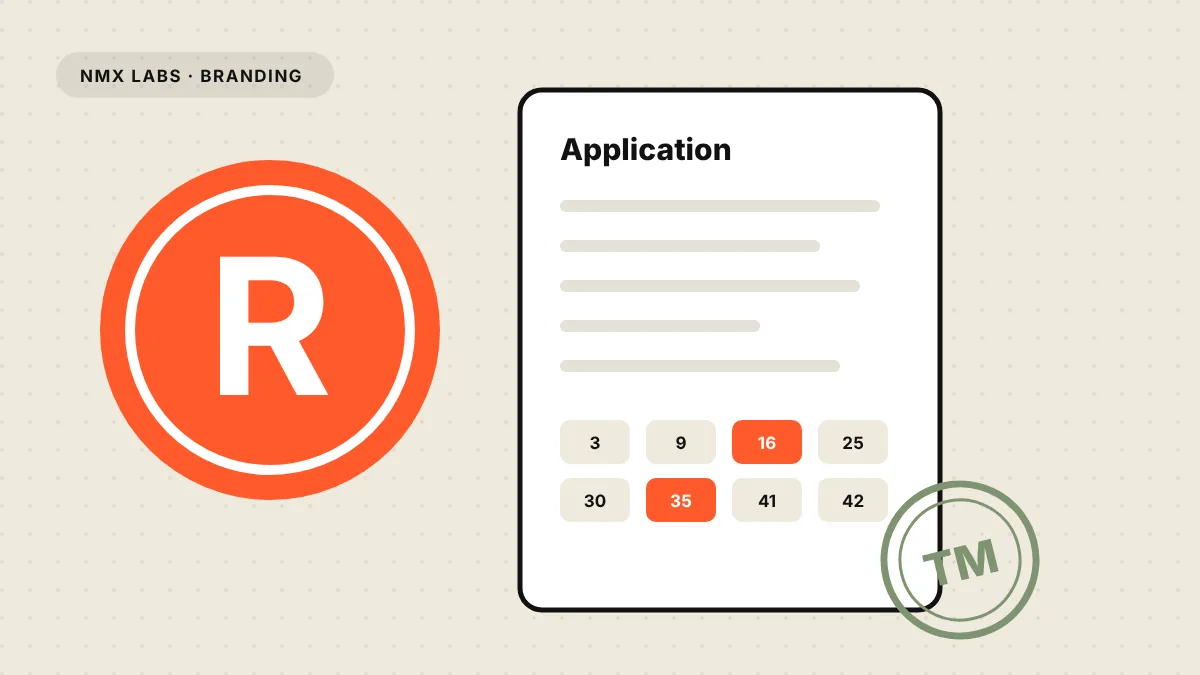
Trademarks are registered for specific goods and services, grouped into 45 classes under the international Nice Classification: classes 1 to 34 for goods and 35 to 45 for services. Some common ones for the brands we work with:
| Business | Classes often considered |
|---|---|
| Skincare and cosmetics | 3 (cosmetics), sometimes 5 if products are medicated |
| Packaged food and snacks | 29 and 30, depending on the products |
| Beverages | 32 for non-alcoholic drinks, 30 for tea and coffee |
| Clothing and footwear | 25 |
| Online retail of your own products | Often 35 in addition to the goods class |
| Software and apps | 9 and 42 |
| Restaurants and cafés | 43 |
Fees are charged per class, so don’t file in ten classes “just in case”. Cover what you sell now and what you’ll realistically sell in the next couple of years, and take advice on the exact descriptions of goods.
What it costs
The application is filed on Form TM-A. Government fees for e-filing are ₹4,500 per class for individuals, startups and small enterprises, and ₹9,000 per class for other applicants such as larger companies. Filing on paper costs more, and recognised startups and registered small enterprises need to show proof of that status to claim the lower fee. An expedited examination route exists at a much higher fee. Professional fees for a search, filing and replies are on top of these.
“Rs 4,500 per class per mark on e-filing for individuals, startups, and small enterprises”
A registration lasts ten years and can be renewed for further ten-year periods.
What happens after you file
- Application number. You get one immediately on e-filing, and from that day you can use the ™ symbol with your mark.
- Examination. An examiner checks the application and may raise objections, for example that the mark is descriptive or similar to an existing one. You reply in writing, and sometimes at a hearing.
- Publication. If accepted, the mark is published in the Trade Marks Journal.
- Opposition window. For four months after publication, anyone can oppose it. Most marks aren’t opposed.
- Registration. If there’s no opposition, or you win it, the mark is registered and you receive the certificate.
A straightforward application often takes around a year. Objections or opposition can stretch it much longer, which is another reason to file early.
™ or ®?
Use ™ freely: it signals that you treat the name as your brand. Use ® only after the registration is granted, and only for the classes it covers. Indian law treats falsely representing a mark as registered as an offence, so don’t put ® on packaging while you’re still waiting.
Design decisions that make protection easier
- Distinctive beats descriptive. “Pure Herbal Soap” is hard to protect. An invented or unexpected word is easier.
- Consider filing the word mark first. A word mark protects the name in any style. A logo (device mark) protects the specific design, and you may want both.
- Avoid look-alike symbols. A logo that resembles a well-known mark invites trouble, however different the name.
- Get the IP in your logo assigned to your company. You can’t comfortably register a logo whose copyright still sits with a freelancer.
Trademarks are item two on our startup branding checklist, right after deciding what you stand for. If you’re budgeting for a new identity, our guide to what a logo really costs explains what to expect from the design side.
Image credits
- *1 Hero illustration and infographics: original artwork by NMX Labs.
Related reading
 BrandingHow much does a logo cost in India, and what are you actually paying for?
 BrandingThe startup branding checklist: what to have ready before you launch
 BrandingPackaging labels in India: the mandatory details your designer must leave room for
- Watch on YouTubeVideo explainers: trademark registration India process
More from Anisha, our market research lead, or browse every Branding post.


Comments
Questions, corrections or your own experience with this? Add it below. We read every comment and publish it after a quick check for spam.