FMCG is walking away from TV. Should you care?
India’s biggest soap-and-snack advertisers built their brands on the telly. Now the money is heading to phones, creators and shopping apps, in a year when TV can’t even show its ratings. We went through the numbers to see what’s real, and what a smaller brand should do about it.
Key takeaways
- By dentsu’s estimate, digital took 64% of FMCG ad spend in 2025, up from 53%. TV fell from 40% to 29%.
- The famous 70% TV figure is real, but it covers five FMCG giants in 2024, not the whole category.
- TV is shrinking in the mix, not vanishing. It still does heavy work on reach and awareness.
- For smaller brands: don’t copy the cut. Copy the discipline of testing where the next rupee works.
In this article
- The numbers, and the trap inside them
- Why the money is walking
- Don’t bin the telly yet
- Should you care?
- Quick answers
- The bottom line
The numbers, and the trap inside them
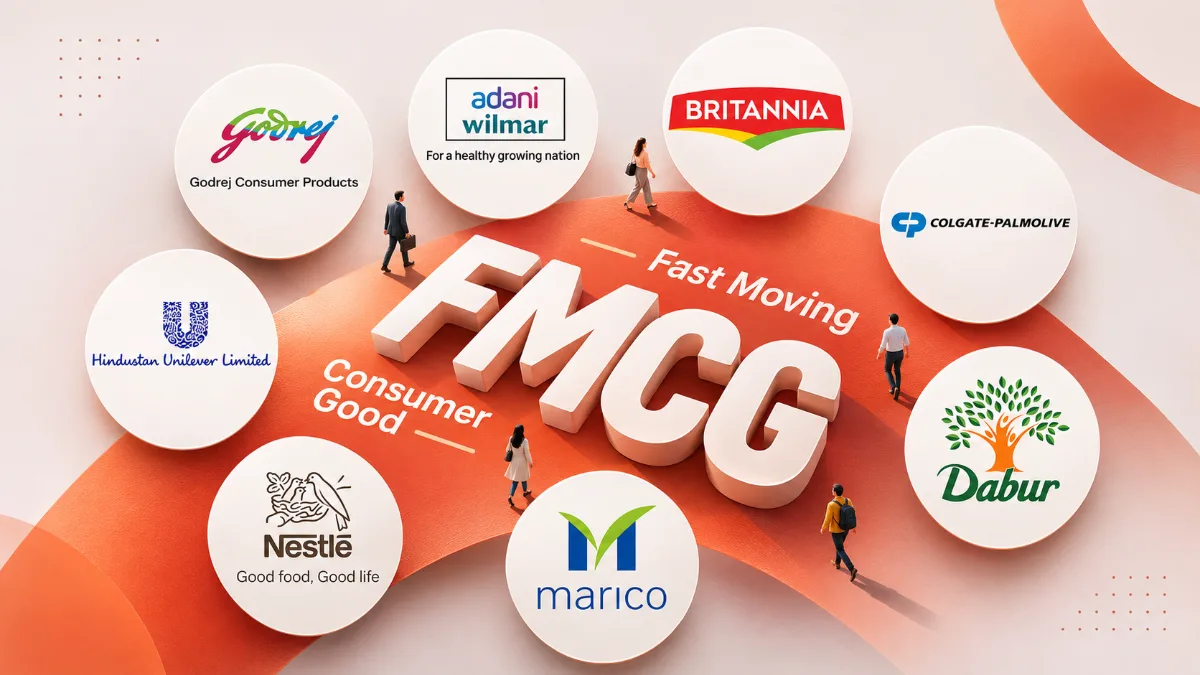
Until recently, TV was the FMCG default. A Madison World report found the five FMCG majors among India’s ten biggest advertisers put about 70% of their budgets into TV in 20241.
Since then, company after company has told a more digital story. Each measures it differently, so read across with care.
| Who | What was reported |
|---|---|
| Hindustan Unilever | 40% of ad spend on digital, as told to shareholders in 20252; later, 30,000 creators, double its earlier number3 |
| Marico | 55% of core ad spend on digital3 |
| Emami and Nestlé India | More than half of ad budgets on digital, reported September 20264 |
Across the category, the dentsu e4m report puts digital at 64% and TV at 29% for 20255.
Here’s the trap. You can’t subtract 29 from 70 and announce a collapse. One figure covers five companies, the other an entire sector, and they come from different agencies. The direction is clear. The size of the swing between those two numbers isn’t.
Why the money is walking
1. Margins got tight
A big TV buy is a large, fixed cost. Madison Media’s chief digital officer told Pitch that pressure on volumes and margins made it an easy thing to trim5.
2. Digital shows its receipts
Search, retail media and quick commerce can link an ad to a cart5. Quick-commerce advertising across all categories jumped from ₹1,325 crore to ₹4,000 crore in 2025, by Madison’s count6. A dashboard is very persuasive in a budget meeting.
3. Creators became a channel

This isn’t only an Indian habit. Unilever says it now works with more than 500,000 creators, up from 75,000 in 2024. Industry analysis reported by the Guardian shows its UK TV spend down just over half so far in 20267.
4. TV lost its scoreboard

India’s government suspended BARC’s TV ratings in July, pending registration under a new policy, and they were still off in early November8. Buying TV without current ratings is like running Meta ads with reporting switched off. The shift began earlier, so don’t pin it all on the blackout.
Don’t bin the telly yet
Linear TV advertising fell 5% to ₹32,855 crore in 2025, Madison estimates. Add connected TV and the large screen grew about 4%6. Some of the money changed pipes, not rooms.
The profit evidence is awkward for the exit crowd. In the UK, Thinkbox’s Profit Ability 2 study found TV delivered 75.7% of big FMCG brands’ ad-driven profit from 66.5% of spend1.
A newer study, The Awareness Effect, adds nuance79:
| UK ad awareness | Broadcast TV | Influencers |
|---|---|---|
| Share of all awareness uplift | 39% | 1.1% |
| Awareness points per £1m | 12 | 15 |
So creators can be efficient, while TV does far more of the total lifting. Two caveats: Thinkbox, which commissioned the study, is UK commercial TV’s marketing body. And British results don’t automatically travel to India.
Dabur isn’t rushing either. Its head of media told BestMediaInfo the goal is to build brands, not weaken them by switching TV off as an experiment10.
Should you care?
Yes, even if your TV budget is a round zero. When giants move into creators, retail media and short video, they arrive in the places smaller brands rely on. Expect more competition for the same thumbs.
| If you are | Our advice |
|---|---|
| Digital-only D2C | Defend distinctiveness. Give people a look and a voice they can spot with the sound off. |
| A regional brand on TV | Don’t cut on headlines. Test one market against a similar one before moving money. |
| A founder-led service brand | Ignore the TV debate. Fix tracking, then scale what brings customers. |
Our editorial judgement, not a tested benchmark.
Five rules before you move a rupee
- Give each channel a job. Reach, trust, search demand or sales. Pick one main job.
- Measure that job. Don’t judge an awareness film by last-click sales.
- Hold something back. Compare similar towns with and without the spend.
- Fund tests from weak lines first. Move money out of underperforming activity before touching what works.
- Count repeat business. A creator spike that never reorders is a nice screenshot.
How we checked this
On 26 November 2026 we compared company statements, agency estimates, trade reporting and UK effectiveness research. For notes 1 to 4, 8 and 10 we relied on search excerpts, not the full articles. We ran no media test and saw no company’s internal data.
The bottom line
Quick answers
Are FMCG brands leaving TV?
They’re giving it a smaller share. Dentsu’s figures show TV at 29% of FMCG ad spend in 2025, down from 40%. That is a big cut, not a goodbye.
Is digital more profitable than TV for FMCG?
The sources here don’t show that for India. The UK profit study cited above favours TV for big FMCG brands.
Should a small brand advertise on TV?
Only if you need broad reach in markets you can actually supply, and can afford to measure the effect.
FMCG isn’t slamming the door on TV. It’s asking every channel to justify its seat. Do the same, but be suspicious of any channel that wins simply because it reports fastest. The easiest thing to measure isn’t always the thing doing the work.
Notes and sources
- Checked on 26 November 2026. ↩
- BestMediaInfo: Why are FMCG brands cutting TV, their most profitable medium? ↩
- BestMediaInfo: FMCG ad spends in Q1 FY26 ↩
- PrintWeek: FMCG majors tighten ad spends ↩
- Storyboard18: The default screen is no longer a television screen ↩
- Pitch: What’s driving the FMCG-TV narrative, February 2026 ↩
- Social Samosa: Pitch Madison Advertising Report 2026 ↩
- Hello Partner: Unilever halves UK TV spend ↩
- exchange4media: The TV ratings blackout ↩
- The Media Leader: The Awareness Effect findings ↩
- BestMediaInfo: Why Dabur won’t risk reducing TV advertising
Image credits
- *1 Illustration by NMX Labs
- *2 Image: assets.turbologo.com (source)
- *3 Image: upload.wikimedia.org (source)
Related reading
 Brand stories · Most read10-minute food: Zepto Cafe vs Swiggy Bolt vs Blinkit Bistro, and why only one model is still growing
 Brand storiesCampa Cola’s comeback: how Reliance restarted the cola war on price
 Brand storiesSwiggy vs Zomato: the push-notification copy war, and why brand voice beats discounts
- Watch on YouTubeVideo explainers: FMCG is walking away from TV
More from Anisha, or browse every Brand stories post.


Comments
Questions, corrections or your own experience with this? Add it below. We read every comment and publish it after a quick check for spam.