Cadbury’s “Not Just a Cadbury Ad”: the AI personalisation campaign that came too early
Years before every app could clone a voice, Cadbury made Shah Rukh Khan say the names of thousands of neighbourhood shops. It won India’s first Titanium Lion. Taken apart, it’s still the best brief for AI personalisation an Indian brand has written.
Key takeaways
- In 2020 Cadbury Celebrations gave its Diwali ad space to local shops. In 2021 it went further, using machine learning to recreate Shah Rukh Khan’s face and voice so he named individual stores.
- Store owners generated their own ads on a microsite; the film came in four versions for four store categories, according to the awards entry.
- It won India’s first Titanium Lion in 2022 and the Creative Effectiveness Grand Prix in 2023. Rephrase.ai, the AI partner, was bought by Adobe in November 2023.
- In 2026 the technology is cheap. The hard parts are now the ones Cadbury solved first: a generous idea, the celebrity’s consent, a tight script and clear disclosure.
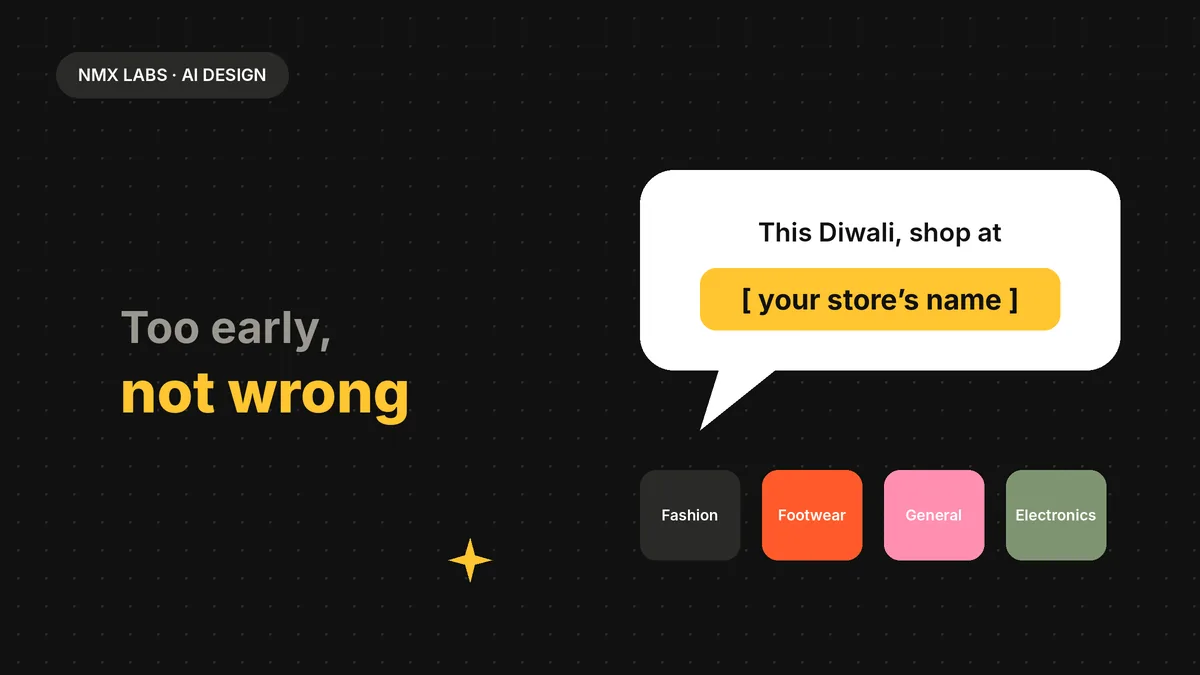
Diwali is the most expensive time of year to advertise in India and, for neighbourhood shops, often the most important time to sell. In 2020, with small businesses battered by the pandemic, Cadbury Celebrations did something unusual with its festive ad: it handed part of it over to them. The next year it went much further, and made the country’s biggest film star say the names of their shops.
The campaign is remembered as an early deepfake ad. That undersells it. It’s one of the clearest examples of AI personalisation built around a generous idea, and it was finished years before the tools to make it became cheap.
2020: give the ad away
The first version didn’t use any AI. Cadbury’s idea was to share its advertising space with local stores, a hyper-local campaign that promoted neighbourhood shops instead of only the chocolate1. It established the thing that matters most in this story: the brand was doing a favour for someone other than itself.
2021: make the star say your shop’s name
For Diwali 2021, the team asked a bigger question. What if Shah Rukh Khan, already Cadbury’s ambassador, could become the ambassador for every small shop near you? Working with Rephrase.ai and DeltaX, they used machine learning to recreate his face and voice so that he could name individual stores in the ad1.
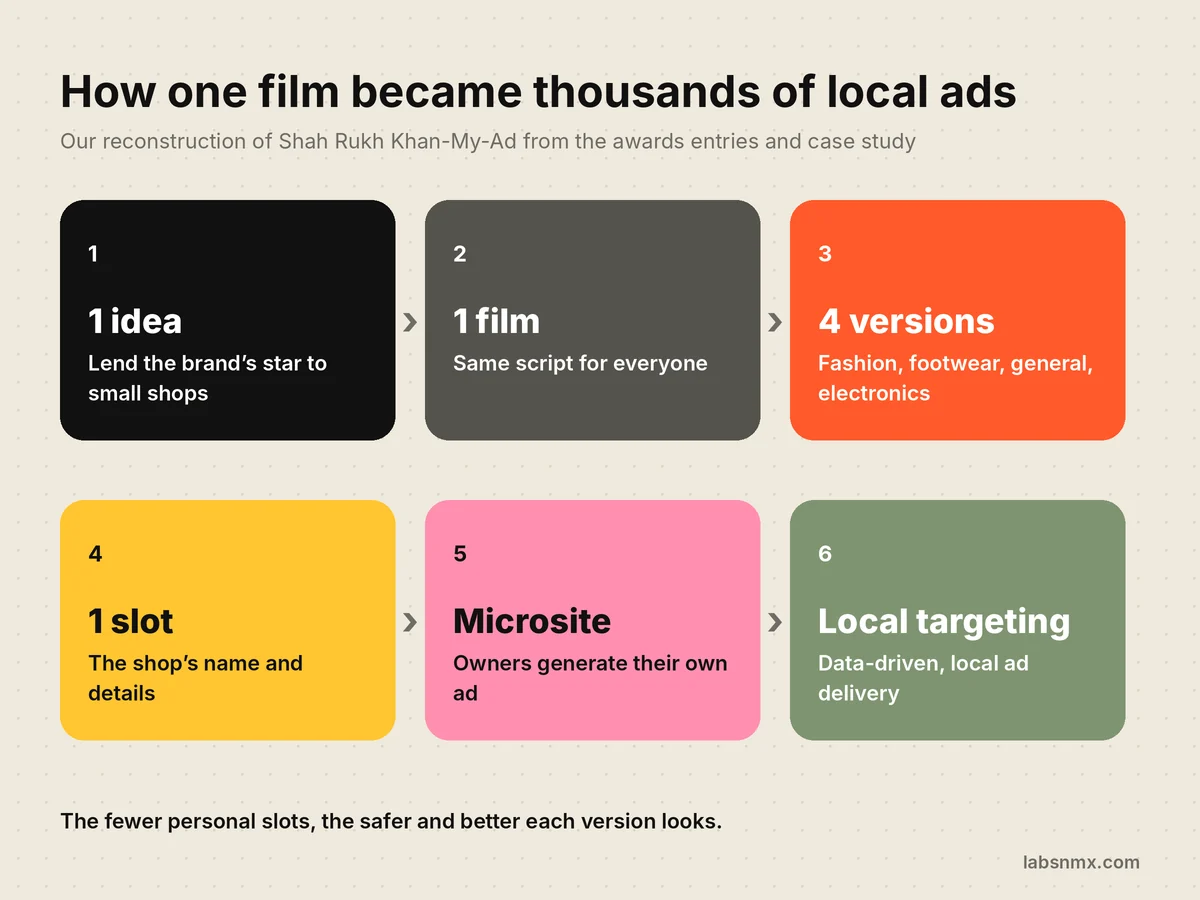
Shop owners went to a microsite, entered their store’s details, and got their own version of the film to share on social media and messaging apps2. The film came in four versions, one each for fashion, footwear, general and electronics stores, so that what he said made sense for the shop being promoted3. The microsite launched publicly in late October 20218.
The ads were then targeted locally, the part of the work that later won a Gold Lion for data-driven targeting6. Every film worked twice: once as a Cadbury ad and once as an ad for a business that could never have afforded a film star.
The results, and how to read them
At Cannes Lions 2022 the campaign won a Titanium Lion, the first for India513, along with Gold Lions in Creative Data and Direct6. A year later it took the Creative Effectiveness Grand Prix in the market disruption category, which judges results as well as the idea7. Ogilvy’s global chief executive, Devika Bulchandani, called it an example of “personalisation at scale”11.
The effectiveness entry describes an unprecedented 35% business growth4. Treat that the way you’d treat any awards entry: the figure is the entrant’s own, and the entry doesn’t define exactly what was measured. What’s beyond dispute is the reach of the idea, which became one of the most-cited Indian campaigns of the decade.
Two years after the campaign, in November 2023, Adobe bought Rephrase.ai. Reports described it as Adobe’s first acquisition of an Indian start-up and its first of a generative AI company, with most of the team joining Adobe910.
We took it apart
How we checked this
We rebuilt the campaign’s structure from the agency case study and awards entries, then wrote the same structure as a template a smaller brand could use. Nothing here is from Cadbury’s internal files.
| Layer | What Cadbury did | Why it mattered |
|---|---|---|
| Idea | Lend the brand’s star to small shops1 | Gave people a reason to share it that wasn’t about chocolate |
| Fixed script | One film, the same structure for everyone | Only the shop details changed, so quality stayed under control |
| Variants | Four store categories3 | Enough relevance without an unmanageable number of versions |
| Slot | The shop’s name and details | The single personal element, which is what made people share it |
| Self-serve tool | A microsite for owners2 | Thousands of ads without an agency team making each one |
| Distribution | Local, data-driven targeting6 | The right film reached the right street |
The template for a D2C brand: one 20-second film; three variants (for example, by city tier or by retail type); one slot (a stockist’s name, a city or a customer’s first name); a simple form that produces the file; and a rule that every variant is reviewed by sampling before it goes out. The fewer slots, the safer and better it looks.
Why we say it came too early
In 2021 this needed a specialist start-up, custom machine learning, a celebrity willing to have his face and voice modelled, and an agency able to coordinate all of it. Very few brands could attempt it. Today, voice cloning, lip-sync and avatar tools are sold by the month, and a version of this campaign is technically within reach of a mid-sized brand.
What hasn’t got cheaper is everything around the technology. The idea still has to be generous rather than gimmicky. The person whose face or voice is used still has to agree, in writing, to every use. Audiences are now far more aware of synthetic video, and platforms increasingly label it; Meta, for example, can add an “AI info” label to ads made or edited with AI, which we covered here. Cadbury succeeded because the idea did something people valued and nobody felt tricked. That part was never about the model.
Cadbury kept the series going, too, with other personalised festive work, including messages featuring Hrithik Roshan12. The approach outlived the novelty.
If you want to try this in 2026
Start with who benefits
Cadbury’s campaign worked because the shopkeeper got something. Ask who gets value from your personalised ad besides you: a stockist, a delivery partner, a customer celebrating something.
Get consent that covers the use
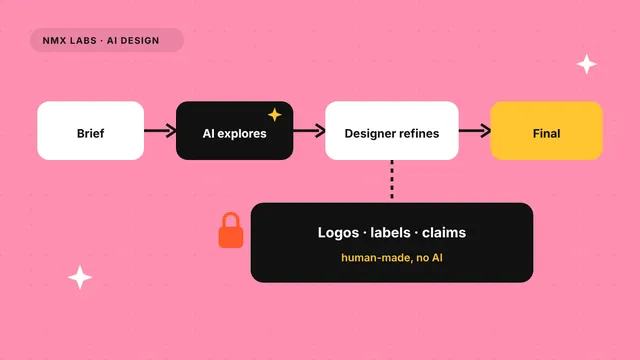
If you use a real person, including a founder or an employee, get written permission that covers synthetic versions, every channel and a time limit. If you can’t, use a voice-over artist or an illustrated character instead.
Personalise one thing, not five
Each extra slot multiplies the chance of a weird result. Cadbury’s main slot was the store. Yours can be a name, a city or an occasion.
Say it’s AI
Disclose the technique in the caption or the film. It costs you nothing and protects the trust that makes the idea work.
Measure what the partner gets
If the idea is to help someone else, measure that too. Count how many partners generated and shared their version, and ask a sample of them whether it brought customers in. A campaign that is generous on paper but useless to the people it features won’t travel the way Cadbury’s did.
Review by sampling
Before launch, have a person watch a random sample of generated versions, including the strangest inputs you can think of. The one embarrassing version is the one that gets screenshotted.
The bottom line
Most AI personalisation is a brand saying your name back to you. Cadbury’s was a brand saying someone else’s name, a shop that needed the help, and that’s why it travelled. The tools that made it remarkable in 2021 are ordinary now. The brief that made it work is still rare.
Notes and sources
- Wavemaker: Shah Rukh Khan My Ad, case study ↩
- Storyboard18, 23 June 2023: Mondelez and Ogilvy India bring home the Creative Effectiveness Grand Prix ↩
- The One Show: Shah Rukh Khan-My-Ad, awards entry and credits ↩
- The One Show: Shah Rukh Khan-My-Ad, effectiveness entry ↩
- Adgully: Cadbury’s Shah Rukh Khan My Ad is the first Titanium Lion winner for India ↩
- LBB Online: Ogilvy wins Gold Lions for its work at the intersection of data and creativity ↩
- Ogilvy, 22 June 2023: Ogilvy wins Creative Effectiveness Grand Prix for Cadbury’s ‘Shah Rukh Khan-My-Ad’ ↩
- Product Hunt: #NotJustACadburyAd with Rephrase.ai, launched 25 October 2021 ↩
- Business Today, 22 November 2023: Adobe ventures into AI video with Rephrase.ai acquisition ↩
- Inc42: Adobe acquires Bengaluru-based AI video creation platform Rephrase.ai ↩
- Lions Daily News (via Issuu): Ogilvy takes Grand Prix for local-targeted spots ↩
- afaqs: Cadbury Celebrations is back with a tech-driven ad for Raksha Bandhan ↩
- BestMediaInfo, June 2022: Rephrase.ai, Ogilvy and Wavemaker win the Titanium Lion for #NotJustACadburyAd ↩
Image credits
- *1 Hero illustration: original artwork by NMX Labs.
- *2 Infographic: original artwork by NMX Labs, using the figures cited in the notes. You may reuse it with a link to this page.
Related reading
 Brand storiesWhy CRED made Rahul Dravid smash a car mirror: the against-type casting playbook
 Brand storiesAmul made memes before the internet: what 60 years of topical ads teach brand teams about moment marketing
 AI designAI in your Meta ads: the “AI info” label, automatic enhancements and what the new terms mean
- Watch on YouTubeVideo explainers: Cadbury Not Just A Cadbury Ad AI campaign
More from Neeraj, or browse every AI design post.
Comments
Questions, corrections or your own experience with this? Add it below. We read every comment and publish it after a quick check for spam.