Meta’s Andromeda, explained: why your ad creative now does the targeting
Meta rebuilt the system that decides which ads are even considered for each person. The practical result: ten near-identical ads now behave like one.
Quick summary
- Andromeda is Meta’s retrieval system: it narrows tens of millions of ads to a few thousand candidates for each person.
- Because retrieval leans on what an ad shows and says, distinct concepts reach different people; near-copies compete for the same slot.
- Small brands should aim for fewer, genuinely different concepts, then iterate on winners.
- Simple account structures and broad audiences give the system room to find buyers.
Summary by Neeraj. Prefer an AI take? Ask Google AI to summarise it (opens in a new tab).
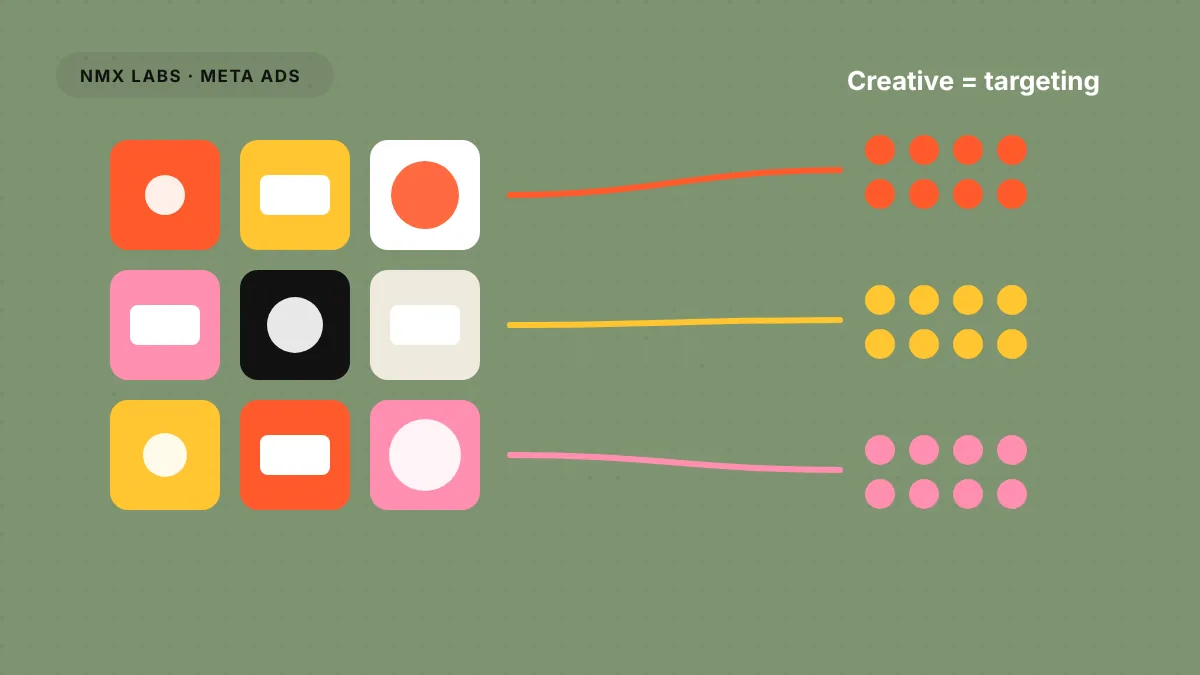
If your Meta results changed over the past year in ways nobody could explain (broad audiences beating your carefully built interest stacks, creative fatiguing faster, campaigns with fewer ad sets doing better), a large part of the reason has a name: Andromeda.
What Andromeda actually is
Every time someone opens Instagram or Facebook, Meta picks a few ads from an enormous pool. It does this in stages. The first stage, retrieval, is a fast filter that decides which ads are even worth considering for that person. Meta’s engineers described Andromeda in late 2024 as the system that narrows tens of millions of ad candidates down to a few thousand. Later stages rank those few thousand and run the auction.
“…from tens of millions of ad candidates into a few thousand…”
The old approach leaned heavily on targeting rules. The new one leans on models that look at the ad itself, alongside each person’s behaviour, much earlier in the process. By the end of 2025 Meta was telling advertisers to treat creative diversification as a foundational practice: varying formats, messages and the kinds of people shown.
Why near-identical ads now underperform
If retrieval matches people to ads partly on what the ad shows and says, then ten versions of the same image with different headlines give the system roughly one option, not ten. They tend to reach the same kind of person and compete with each other for the same opportunity.
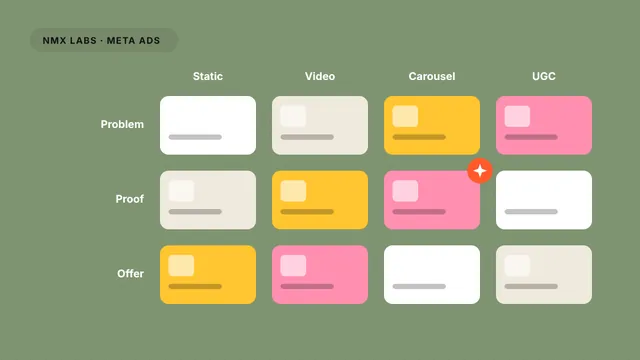
Ten genuinely different concepts are different. A founder talking to camera, a close-up texture video, a price comparison carousel, a customer review static and a gifting angle each look and read differently, so each can be matched to different people. That’s what “creative is the new targeting” means in practice.
What counts as a different concept
Use the framework from our creative system post: angle, hook and format. A new concept changes at least the angle or the format, usually both.
| Variation (one concept) | New concept |
|---|---|
| Same image, new headline | Problem angle as a talking-head video, instead of an ingredients static |
| Same video, different background music | Gifting angle as a carousel, instead of a self-purchase angle |
| Same layout, different colour | Customer-review static, instead of a founder story |
| Same ad, “Buy now” vs “Shop now” | Price-per-day comparison, instead of a lifestyle scene |
Variations still have a job. Once a concept wins, new hooks and cut-downs of it keep it fresh. But they extend a concept; they don’t replace the need for new ones.
How much creative a small brand needs
Bigger advertisers now upload creative at a volume most Indian startups can’t match, and they don’t need to. Creative has to match budget, because every concept needs enough spend to be judged. A sensible rhythm for a brand spending modestly every month:
- Three to five new concepts a month, each a different angle or format.
- Two or three iterations of whatever won last month.
- Both 4:5 and 9:16 versions of each, so placements aren’t left to awkward crops.
If that sounds like more creative than your budget can test, it probably is. Fund fewer ad sets properly using the maths in our Meta budget guide rather than spreading thin.
Account structure that works with it
- Fewer campaigns and ad sets. Consolidated structures give the system more data per decision.
- Broad audiences by default. Let the creative attract the right people; use exclusions and location limits where the business needs them.
- Several distinct ads per ad set, rather than one ad per ad set.
- Clean conversion data. A working pixel and Conversions API matter more than ever, because the models learn from what you report.
- Patience. Changing everything every two days resets learning. Set a review rhythm and keep to it.
What Andromeda doesn’t change
A weak offer is still weak, and a landing page that breaks its promise still loses the sale. Andromeda changes which ads get a chance; it doesn’t make a bad ad good. The brands winning on Meta right now are the ones with a clear idea of why someone should buy, expressed in many genuinely different ways.
Image credits
- *1 Hero illustration and infographics: original artwork by NMX Labs.
Related reading
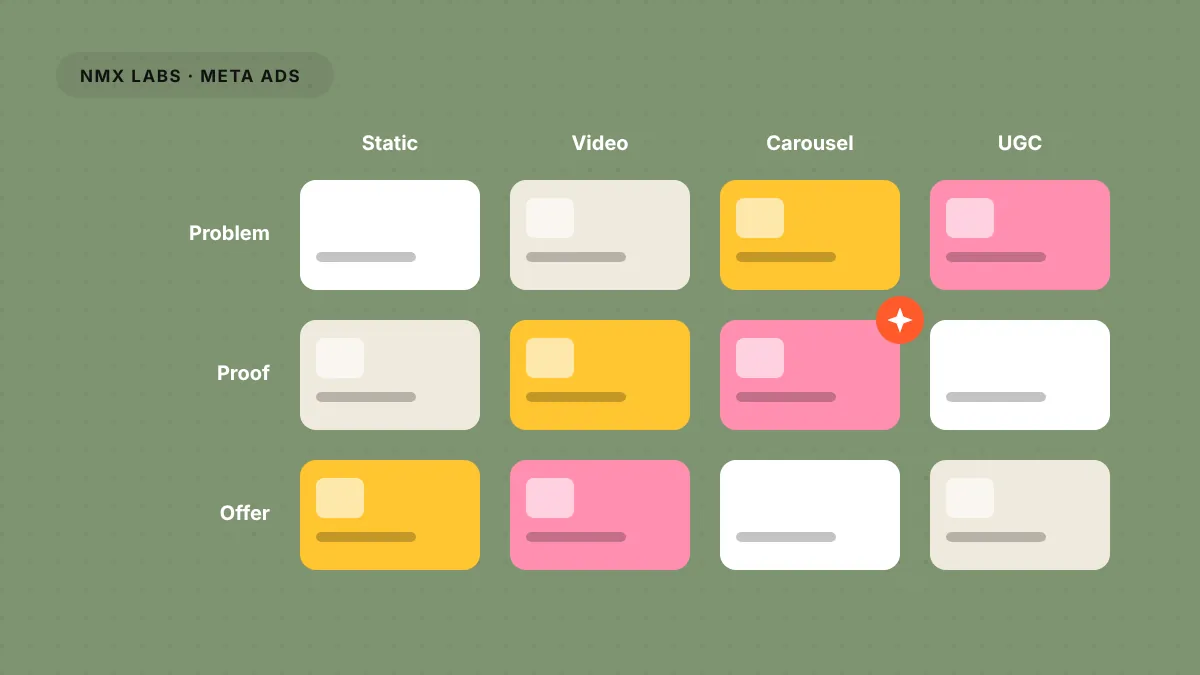 Meta adsHow we build a Meta ads creative system instead of a batch of ads
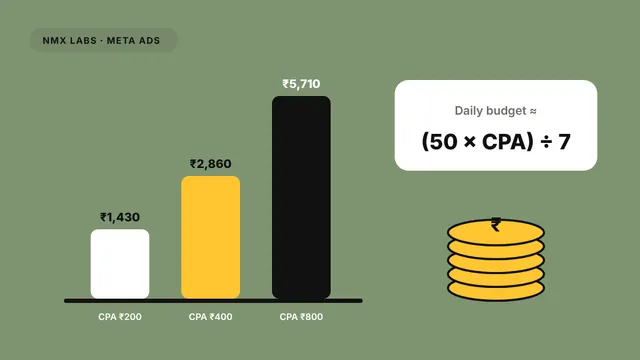 Meta adsHow much should an Indian startup spend on Meta ads? A budget guide with the maths
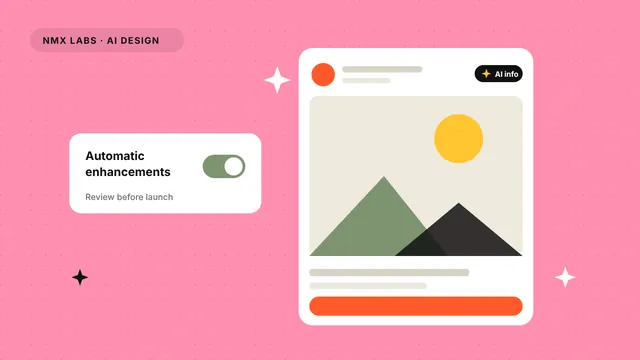 AI designAI in your Meta ads: the “AI info” label, automatic enhancements and what the new terms mean
- Watch on YouTubeVideo explainers: Meta Andromeda creative diversity
More from Neeraj, our AI design expert, or browse every Meta ads post.

Comments
Questions, corrections or your own experience with this? Add it below. We read every comment and publish it after a quick check for spam.