Amul made memes before the internet: what 60 years of topical ads teach brand teams about moment marketing
In March 1966 a hoarding in Bombay showed a little girl dressed as a jockey and a single pun. More than 4,000 ads later, the format has barely changed. Here’s why it still works and how to borrow it without embarrassing your brand.
Quick summary
- Amul’s first topical ad ran in March 1966: the mascot as a jockey during Bombay’s racing season, with the pun “Thoroughbread”.
- The format is fixed (pun headline, the girl reacting to the news, the brand line) and only the topic changes. That’s why it can move fast.
- Speed came from trust: the dairy cooperative let the agency publish quickly instead of routing every ad through committees.
- For moment marketing today: fix your format, pre-agree what’s off-limits, and tie every joke back to the product.
Summary by Anisha. Prefer an AI take? Ask Google AI to summarise it (opens in a new tab).
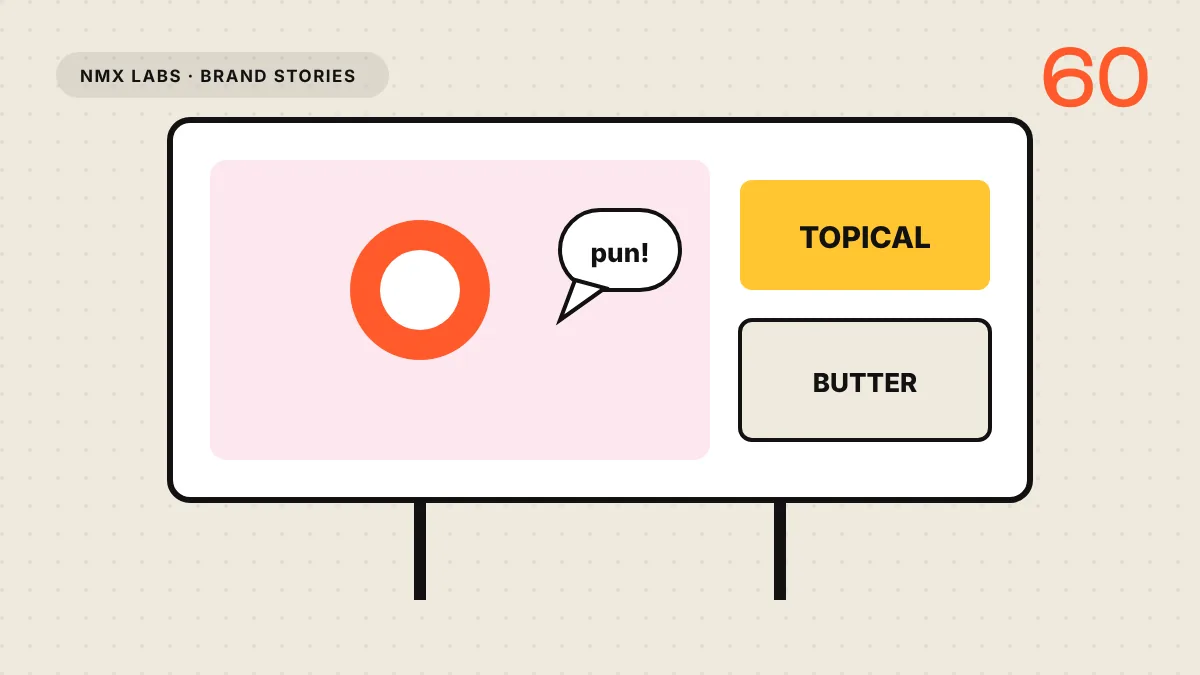
Every brand team in India has had the meeting. Something is trending, someone says “we should post on this”, and three hours later a nervous approval chain produces something that arrives after the moment has passed. Amul has been doing the same thing, on time, since 1966.
2026 is the 60th year of Amul’s topical ads, the hoardings and posts where a small girl in a polka-dot dress comments on whatever India is talking about. It’s widely described as the world’s longest-running ad campaign. It’s also the clearest case study anyone has for moment marketing, because it has survived six decades of news, outrage cycles and new media without changing its formula.
Where it started: a jockey and a pun
The first topical ran in March 1966, during Bombay’s horse-racing season. The Amul girl appeared as a jockey, and the headline was a single word: “Thoroughbread”. It joined butter, bread and the news of the week in one pun, which is still the template.
The campaign came from Sylvester daCunha’s agency, which took on the Amul butter account that year. The mascot was drawn by art director Eustace Fernandes, and the “Utterly Butterly” line came out of a conversation between daCunha and his wife Nisha. Amul’s founder Verghese Kurien reportedly found the line a bit mad but told them to go ahead, an early sign of the trust that would make the campaign possible.
The format never changes, and that’s the point
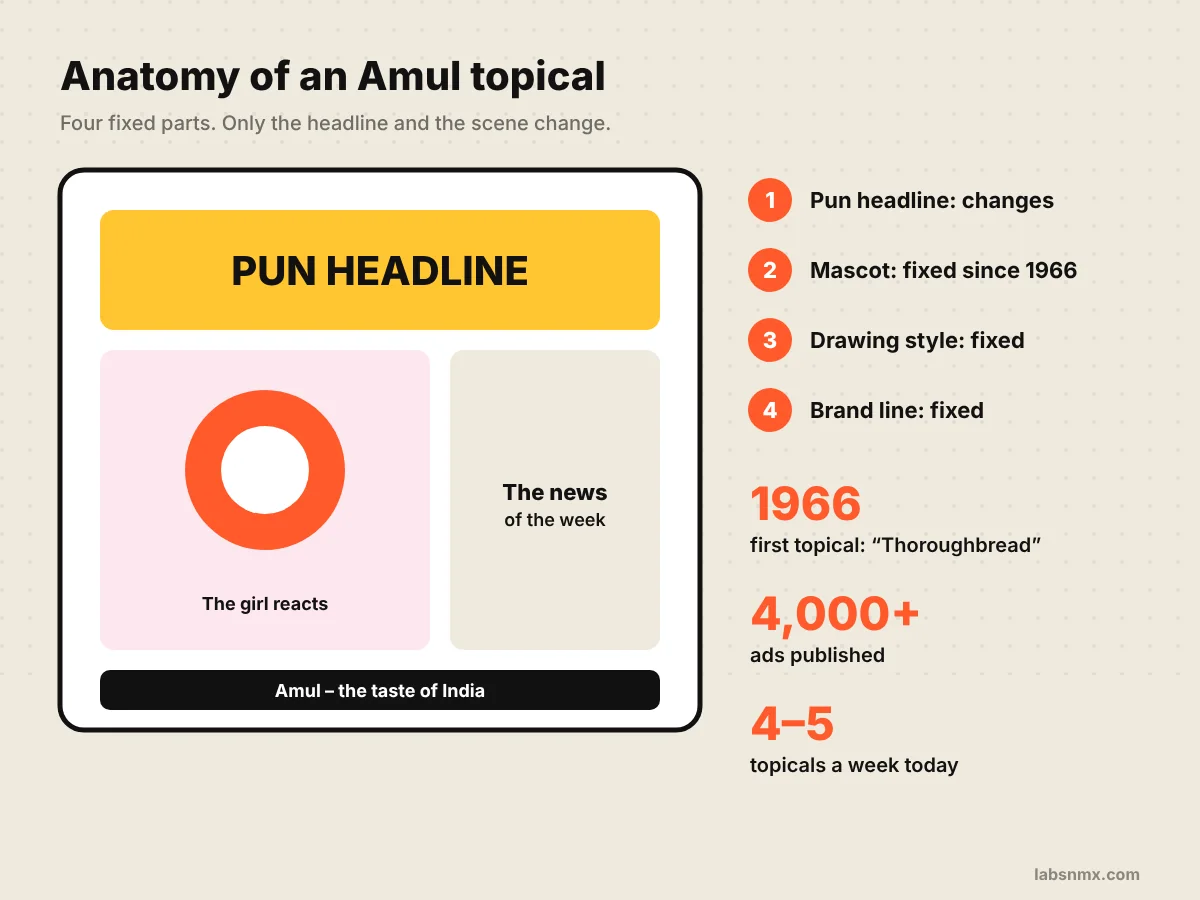
Look at any Amul topical from the last sixty years and you’ll find the same four parts: a short punning headline, the Amul girl reacting to the subject of the news, an illustration in the same hand-drawn style, and the brand line at the bottom. Only the topic changes.
This is why the campaign can move at news speed. Nobody has to decide the layout, the tone, the typography or the character each time. The creative decision is reduced to one question: what’s the pun? Brand strategists would call the girl and the format distinctive assets, the things that make an ad recognisable as Amul’s before you read a word. Sixty years of consistency means you can spot one from across a road.
Speed came from trust, not tools
In the early decades the ads went out roughly once a month on hoardings. In the social-media era the team has said it produces four or five a week. That output comes from a tiny team at daCunha Communications, now led by Sylvester’s son Rahul, who took over in the early 1990s, working with a cartoonist and a copywriter.
The enabling factor was organisational. Kurien’s trust in the agency meant topicals could go out fast instead of waiting in approval queues. That trust was tested. An early ad about Indian Airlines annoyed the authorities enough that they threatened to stop serving Amul butter on flights, according to Amul’s own history of the campaign. The ads kept going.
“…keep it fresh, funny and relevant.”
Why it rarely gets cancelled
Amul’s topicals regularly comment on politics, cricket, film and scandal, and still rarely cause the kind of backlash that sinks brand posts. Rahul daCunha has described the character as disarming: criticism is hard to aim at a cartoon child. The puns also soften the commentary. A wordplay headline reads as a wink, not a verdict. And the campaign has largely stayed away from religion, according to ThePrint’s history of the ads, which removes one of the most reliable sources of offence in India.
How to do moment marketing like Amul, without being Amul
1. Fix the format before you need it
Decide your template now: one layout, one illustration or photo style, one tone, one sign-off. When the moment arrives, your team should only be writing the headline. A Canva or Figma template with locked brand elements is enough to start.
2. Agree the no-go list in advance
Write down the topics you won’t touch: tragedies, religion, active political disputes, anything involving a death. Having the list before the trend appears takes the riskiest judgement out of the rush.
3. Create a fast lane for approvals
Give one or two people the authority to publish topicals inside the template, without the full approval chain. That’s the modern version of Kurien’s trust. If every post needs four sign-offs, you’ll always be late.
4. Always come back to the product
The Amul joke is almost always about butter, bread or dairy. A topical that’s funny but could be posted by any brand is free entertainment, not marketing. Our creative system post covers how to keep a message tied to the offer.
5. Measure the series, not the single post
One topical rarely moves a business. A recognisable series, repeated for months, builds memory. Judge the format over a quarter, not by whether one post went viral.
The quiet lesson
Most brands chase trends by changing their look every time. Amul did the opposite: it kept everything the same except the joke. That consistency is why a 60-year-old campaign still feels current, and why the girl in the polka-dot dress is more recognisable than most celebrities brands pay to appear in their ads. That last thought is worth holding onto for our next post on CRED’s celebrity playbook.
Sources
- Amul: The Amul topical story
- ThePrint: How an ‘utterly butterly’ idea kicked off
- Business Standard: The ‘utterly butterly’ story, by Sylvester daCunha
- Business Standard: Swinging at fifty
- Gulf News: The Indian ads punning for half a century
- The Tribune: Amul Girl, Sylvester daCunha’s utterly butterly legacy
- YourStory: The Amul campaigns continue to capture the pulse of India
Image credits
- *1 Hero illustration and infographics: original artwork by NMX Labs.
Related reading
 Brand storiesWhy CRED made Rahul Dravid smash a car mirror: the against-type casting playbook
 Meta adsHow we build a Meta ads creative system instead of a batch of ads
 Brand storiesSwiggy vs Zomato: the push-notification copy war, and why brand voice beats discounts
- Watch on YouTubeVideo explainers: Amul topical ads moment marketing
More from Anisha, our market research lead, or browse every Brand stories post.






Comments
Questions, corrections or your own experience with this? Add it below. We read every comment and publish it after a quick check for spam.