The 10-minute war: how Blinkit, Zepto and Instamart are fighting with brand, not just dark stores
Speed stopped being a differentiator the day everyone promised ten minutes. Here’s what the numbers say about who’s winning India’s quick-commerce race, how each player is trying to be remembered for something else, and what that means if you sell on these apps.
Quick summary
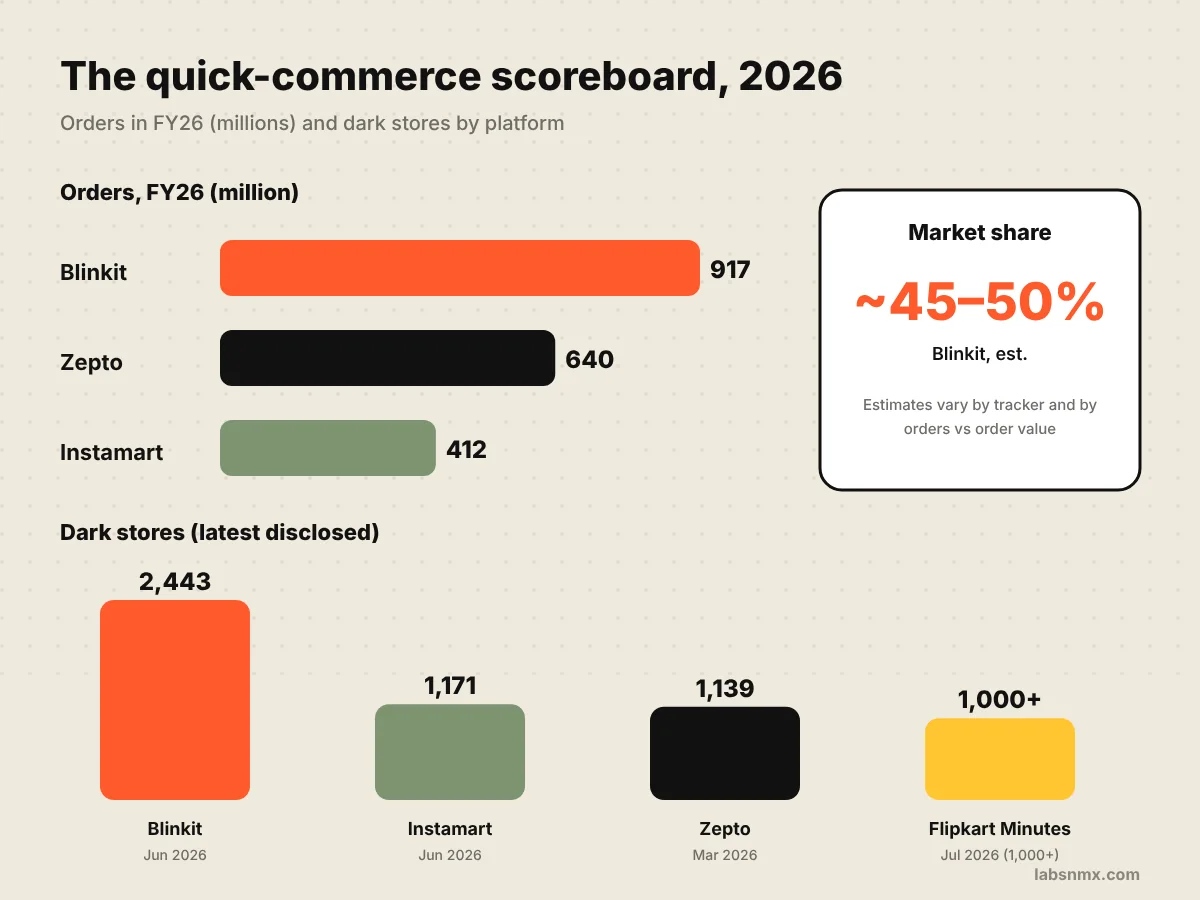
- Blinkit leads clearly: about 917 million orders in FY26 against roughly 640 million for Zepto and 412 million for Instamart, per Zepto’s own draft prospectus.
- Amazon Now and Flipkart Minutes arrived with deep pockets and existing trust, so pure speed no longer separates anyone.
- When every app is fast, brands compete on range, reliability and the habit they own: impulse, top-up shop, or emergency.
- For brands selling on these apps, the battlefield is a thumbnail. Packs and hero images have to work at two centimetres.
Summary by Anisha. Prefer an AI take? Ask Google AI to summarise it (opens in a new tab).
Five years ago, “groceries in ten minutes” was a pitch that sounded like a stunt. In 2026 it’s an expectation in most large Indian cities, and that’s exactly the problem for the companies that made it one. When every app on your phone promises the same speed, speed stops being a reason to choose.


So the quick-commerce war has quietly turned into a brand war. The dark stores, the riders and the discounts still matter, but the question each player is now trying to answer is different: when you need something right now, which app do you open without thinking?
The scoreboard, with the caveats
The cleanest comparison comes from an unusual place: Zepto’s own draft IPO prospectus, which included a table comparing its order volumes with listed rivals. For the financial year ending March 2026, it put Blinkit at about 917 million orders, Zepto at about 640 million and Swiggy Instamart at about 412 million. Among those three, that’s roughly 47%, 33% and 21% of orders.
Market-share estimates from research firms vary depending on whether they count orders or order value and which players they include, but they agree on the shape. Blinkit holds somewhere between 45% and 50% of the market, with Zepto and Instamart well behind and fighting each other for second place. Blinkit also had the most stores, at 2,443 by June 2026.
Behind the big three, Flipkart Minutes and Amazon Now are scaling fast. Flipkart said its network crossed 1,000 micro-fulfilment centres in July 2026, and Amazon has been expanding Amazon Now city by city. Neither needs quick commerce to be profitable quickly. Both bring something the startups had to build from scratch: customers who already trust them with payments and returns.
Why “fast” stopped being a brand
Marketers have a name for a benefit every competitor offers: a category entry point. It gets you into the consideration set but doesn’t pick the winner. Ten-minute delivery is now one of those, like “free delivery” was for e-commerce a decade ago.
Once that happens, two things decide who gets opened first. One is mental availability, how quickly the brand comes to mind in a buying moment. The other is distinctiveness, the colours, sounds, words and shapes that let you recognise a brand without reading its name. Quick-commerce apps compete on both, every single day, on a home screen with four lookalike icons.
How each player is trying to own a moment
Blinkit: the default for everything
Blinkit’s strategy is breadth. Its catalogue has pushed well beyond groceries into electronics, beauty, gifting and household items, so it can be the answer to almost any “I need this now” moment. The brand is deliberately plain and utilitarian. It doesn’t need to be loved; it needs to be the reflex. Being the largest also makes it the first place brands launch, which deepens the range further. That’s a flywheel competitors find hard to break.
Zepto: the challenger with a founder story
Zepto leans on being the young challenger: fast-growing, founder-led and loud. Its draft prospectus put the brand in front of investors in 2026, and reports since have described the listing as waiting for better timing. Challenger brands usually win by being sharper about one audience rather than broader, and Zepto’s positioning has leaned towards urban, younger shoppers. Its risk is the classic challenger one: matching the leader’s range costs money that a challenger usually doesn’t have.
Swiggy Instamart: the bundle
Instamart’s advantage is that it sits inside Swiggy, so the same app, the same membership and the same habit that brings you dinner can bring you milk. That’s a distribution advantage more than a brand one. The question for Instamart is whether it develops its own reason to be chosen, or stays the grocery tab in a food app.
Flipkart Minutes and Amazon Now: trust at scale
The two e-commerce giants don’t need to invent a new brand. Customers already know their returns policies and payment flows. Their challenge is the opposite of the startups’: making a big, slow-feeling brand feel instant. Flipkart has leaned into non-grocery categories like electronics, where its catalogue and seller base give it an edge.
What this means if you sell on quick commerce
For D2C brands, quick commerce changes the job of packaging and listings more than any other channel. A shopper scrolling a quick-commerce category sees your product as a small square, next to a dozen others, for about a second. That has practical consequences:
- Design for the thumbnail. Your hero image needs a clear silhouette, one dominant colour and a product name readable at small size. Busy packs disappear. Our AI product photography guide covers how to make listing images quickly without faking the product.
- Put the reason to buy on the first image. Size, flavour or the one benefit that matters goes on the pack shot or a clean overlay, not in a description nobody opens.
- Keep the mandatory label details legible on the product itself, because marketplaces increasingly show back-of-pack images. Our packaging labels post lists what has to be there.
- Use ads to build the habit, then the app to close it. Meta and YouTube create the memory; the quick-commerce search box converts it. Our Meta ads creative system explains how we test the messages that make someone search for you by name.
Who wins?
On current numbers, Blinkit is pulling away, and the gap in order volume widened through 2026. But brand wars in India have a habit of rewarding whoever owns a specific habit rather than whoever is biggest. The interesting question for 2027 isn’t who delivers fastest. It’s whether Zepto, Instamart or the e-commerce giants can make one shopping moment theirs so firmly that the leader’s breadth stops mattering.
Sources
- Analysis Atlas: Quick commerce 2026, citing Zepto UDRHP peer table and quarterly operating data
- Brand Chanakya: India quick commerce and e-commerce statistics 2025–2026
- Digital in Asia: India quick commerce 2026, Blinkit, Zepto, Instamart
- StartupFeed: Quick commerce war 2026, citing Datum Intelligence data reported by Reuters
- TechCrunch: Zepto and the rise of quick commerce in India (2024 background)
Image credits
- *1 Hero illustration and infographics: original artwork by NMX Labs.
- *2 Blinkit logo, a trademark of Eternal Ltd, shown for identification only. Image: Simple Icons (simpleicons.org), brand icon, loaded from cdn.simpleicons.org.
- *3 Swiggy logo, a trademark of Swiggy Ltd, shown for identification only. Image: Wikipedia, file “Swiggy logo.svg”, loaded from en.wikipedia.org.
Related reading
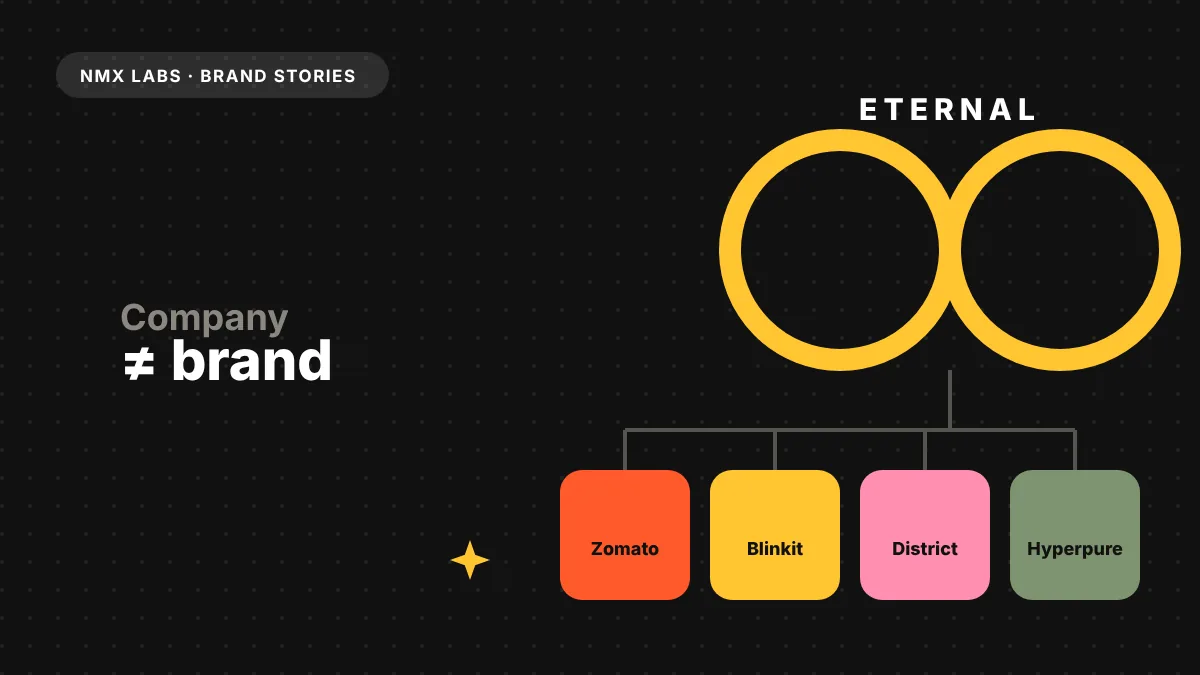 Brand storiesWhy Zomato renamed itself Eternal: the house-of-brands bet behind India’s best-known food app
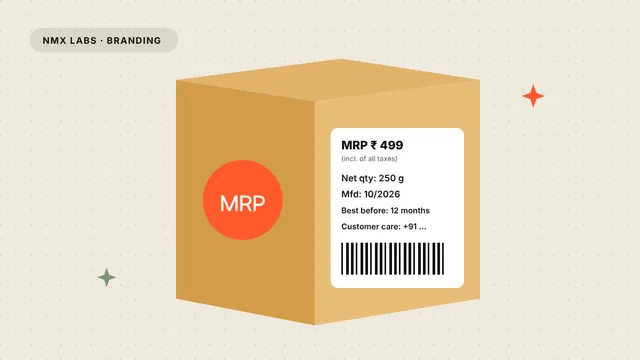 BrandingPackaging labels in India: the mandatory details your designer must leave room for
 Brand storiesSwiggy vs Zomato: the push-notification copy war, and why brand voice beats discounts
- Watch on YouTubeVideo explainers: Blinkit vs Zepto vs Instamart
More from Anisha, our market research lead, or browse every Brand stories post.
Comments
Questions, corrections or your own experience with this? Add it below. We read every comment and publish it after a quick check for spam.